Drainage faults often build up gradually. A slow-draining sink, a gurgling toilet or a bad smell outside may seem minor at first, but they can point to a developing blockage, damaged pipework or a problem further along the system.
In London and Surrey, local housing stock makes early diagnosis especially important. Older properties may have ageing drains or pipe runs altered over time, while terraced homes, flat conversions and small gardens can make access and fault-finding more complicated.
This guide explains what homeowners can look out for, what is usually safe to do yourself, and when it is sensible to bring in a professional.
Early warning signs homeowners should not ignore
The most common early sign is slow drainage from one fixture or several at once. If water takes longer than usual to leave a basin, bath, shower tray or kitchen sink, there is usually a restriction somewhere in the waste pipe or drain line.
Unpleasant smells are another warning sign. If a drain smells foul indoors or around an external gully, that can indicate trapped waste, stagnant water, a partial blockage or an issue with how the drainage system is venting.
Listen as well as look. Gurgling sounds after flushing a toilet or emptying a sink can mean air is being displaced by a blockage, while water backing up into another fixture suggests the problem may sit deeper in the system rather than in a single trap.
- Water draining slowly from sinks, baths or showers
- Toilets flushing sluggishly or rising higher than normal before clearing
- Gurgling noises from plugholes or toilet pans
- Bad smells indoors, near gullies or around inspection covers
- Water appearing around external drains after normal use or rainfall
- Repeated blockages in the same area
Why London and Surrey homes get drainage issues
Period and older homes often have drainage systems that have been altered repeatedly over the years. Extensions, loft conversions and internal layout changes can leave pipe routes less straightforward than expected, which makes recurring faults more likely if falls, joins or connections are not ideal.
Terraced houses and flat conversions can also complicate matters because several waste runs may sit close together, and one problem can sometimes appear to affect another part of the building. In converted flats, it is not always obvious whether the issue is within your own pipework or in a shared section.
Outdoor conditions matter too. Small gardens, paved areas and on-street parking can make access harder when drains need inspecting or clearing. Hard water in many London and Surrey areas also contributes to scale build-up in pipework and appliances, which can worsen flow issues over time.
What you can safely do yourself
A homeowner can often deal with simple, localised build-up at a basin, bath or shower waste. Start with the least invasive checks first and avoid anything that could damage pipework or make a blockage worse.
Remove and clean accessible traps and strainers if you are confident doing so. Hair, soap residue, food waste and grease are the usual causes of minor slow drainage in kitchens and bathrooms.
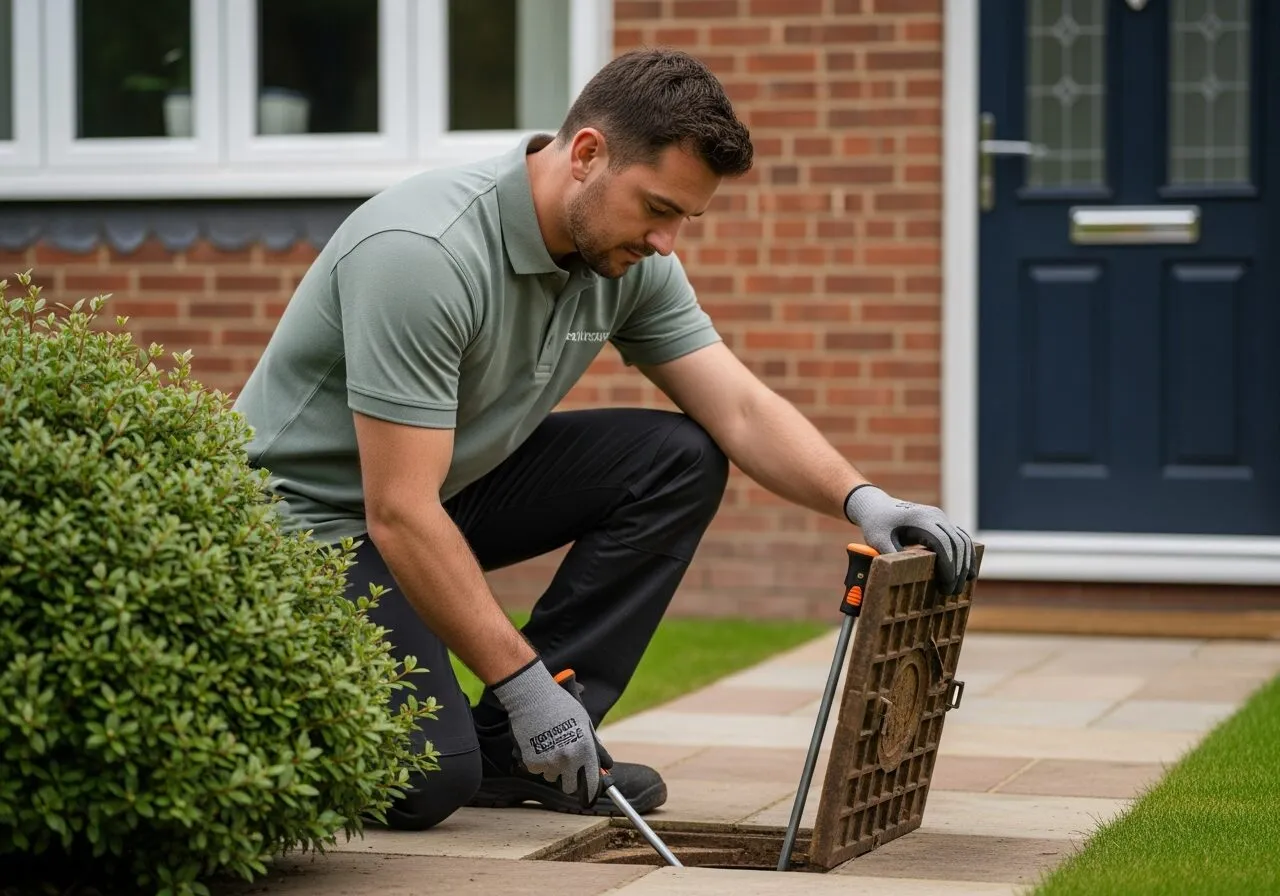
If an external gully is easy to reach, check whether leaves, silt or surface debris are stopping water from flowing away properly. Basic cleaning and careful observation can be useful, especially after heavy rain.
- Lift out and clean plughole strainers regularly
- Clear hair and soap build-up from shower and bath wastes
- Clean under-sink traps where they are accessible and easy to refit correctly
- Check external gullies for leaves, mud and visible debris
- Use a plunger on simple sink, basin or toilet blockages
- Run water afterwards to see whether drainage improves consistently
What to avoid doing
It is easy to turn a manageable drainage issue into a larger one by using the wrong approach. Chemical drain cleaners can be harsh on older pipework, unpleasant to handle and ineffective against many deeper blockages.
Do not keep flushing a toilet that is close to overflowing, and do not continue running taps into a sink that is already backing up. Repeatedly forcing more water into a blocked system can cause internal flooding or send wastewater to another fixture.
Homemade rods, improvised tools and excessive force are also risky. They can dislodge joints, puncture weaker sections or compact the blockage further down the line, making professional clearance more difficult.
- Do not rely on repeated chemical treatments
- Do not ignore recurring smells or repeated slow drainage
- Do not force water into a system that is already backing up
- Do not remove covers or fittings unless you can do so safely
- Do not assume the fault is only in your own flat or unit if drainage is shared
When it is time to call a drainage professional
If more than one fixture is affected, the problem is unlikely to be a simple local blockage. Slow drainage in a sink combined with toilet gurgling, wastewater appearing elsewhere, or repeated external overflows usually points to a deeper issue that needs proper investigation.
You should also call for help if symptoms keep returning after basic cleaning or plunging. Recurring faults often mean the blockage has not been fully cleared or there is an underlying issue such as root ingress, displaced pipework, poor falls or scale and waste build-up deeper in the system.
Professional help is the sensible option where access is limited, drainage serves multiple homes or flats, or there are signs of pipe damage. In London and Surrey, where many properties have awkward layouts and restricted access, a quick visual check is often not enough to identify the true cause.
Practical prevention that makes a real difference
Good drainage habits are usually simple and consistent rather than complicated. Most household blockages build up from everyday materials entering the system little by little.
In kitchens, avoid putting fats, oils and grease down the sink even if they go down as liquid. In bathrooms, hair management matters more than most people realise, especially in homes with several occupants sharing one shower or bath.
- Use sink and shower strainers and clean them weekly
- Let cooking grease cool and dispose of it in the bin, not the sink
- Avoid flushing wipes, cotton pads, sanitary products or excessive toilet paper
- Rinse external gullies and clear leaves during autumn and after storms
- Pay attention to changes in drainage speed rather than waiting for a full blockage
- Keep records of recurring issues if you live in a conversion or share drainage with neighbours
Key Takeaways
- Slow drainage and bad smells are early signs worth acting on.
- Older homes and flat conversions often have more complex drainage layouts.
- Simple cleaning and plunging can help with minor local blockages.
- Avoid chemical cleaners and improvised tools on stubborn problems.
- If several fixtures are affected, get professional drainage help.
Frequently Asked Questions
How do I know if a blockage is serious?
If more than one fixture is draining badly, toilets are gurgling, or wastewater is appearing in another sink, bath or drain, the problem is likely deeper in the system. That usually needs professional investigation rather than another round of DIY clearing.
Is it safe to use chemical drain cleaner?
It is usually better to avoid it, especially in older properties. Chemical cleaners can be hard on pipework, may not clear the real cause and can create handling risks for anyone who needs to work on the drain afterwards.
Why do my drains smell even when water is still going down?
A drain can still be partially blocked while continuing to flow. Smells may come from trapped waste, stagnant water, grease build-up, a dirty trap or a wider drainage issue that has not yet become a full blockage.
Can tree roots affect drains in small London or Surrey gardens?
Yes. Even in compact gardens, roots can find their way into weak points in underground drainage. If blockages keep returning or outside drains back up repeatedly, root ingress is one possible cause.
When should I call CS Services?
If drainage is repeatedly slow, several fixtures are affected, external drains are overflowing, or you suspect a deeper or shared-system problem, CS Services can help. Drainage work is charged from £150 per hour, with no call-out fee, and the price is agreed with the customer before work begins.